Age related Macular Degeneration is the leading cause of vision loss for people age 50 and older in the US.
What is AMD?
AMD is the gradual & progressive breakdown of the macular. The macular is the part of the eye that’s responsible for our central & color vision. Advanced disease symptoms may include central vision blur and straight lines appearing distorted and wavy.
You may also see a small dark spot in the center of your vision that can get larger over time.
Types of AMD
⁃ Dry AMD (none, mild-moderate vision loss)
⁃ Wet AMD (moderate-severe vision loss)
Normal Retina
How does AMD affect your activities of daily living?
⁃ Difficulty identifying faces
⁃ Difficulty reading, driving, watching television
Who are most at risk?
⁃ Caucasians
⁃ Over the age of 60
⁃ Smokers or former smokers
⁃ Family history of AMD
⁃ Other systemic diseases (hypercholesteremia, hypertension)
DRY vs WET AMD
What is/are the treatment options for AMD?
AMD cannot be treated, but its visual symptoms can be managed and the progression slowed down;
⁃ Observation.
⁃ Eye vitamins containing lutein + Zeaxanthin.
⁃ Anti-Vegf injections (injections into the eye ball).
⁃ Laser treatments.
How can I prevent/slow down the progression of AMD?
⁃ Get a comprehensive annual eye examination
⁃ Stop smoking or don’t start
⁃ Healthy diet – green leafy & colored vegetables, fish
Glaucoma is a silent sight-stealing disease. In the early stages, Glaucoma presents with no symptoms. Once vision is lost, it’s permanent. A person can loose as much as 40% of their vision without noticing.
More than 3 million people in the United States and over 60 million people worldwide, have glaucoma. About half of these people are not aware that they have glaucoma.
Glaucoma is the 2nd leading cause of irreversible blindness in people >40 years.
What is glaucoma?
It is a group of eye diseases where the eye’s pressure increases; overtime it damages the optic nerve (the cable that transmits information from the eye to the brain).
This damage leads to permanent irreversible peripheral vision loss.
What causes glaucoma?
Scientists aren’t sure what causes glaucoma.
Who is at risk for glaucoma?
Glaucoma is most prevalent in people of African, Hispanic and Asian descent.
People over the age of 60, family members of those already diagnosed, and people who are severely nearsighted are at risk.
The risk of progression also increases in people with other systemic diseases such as diabetes, hypertension and hypercholesteremia.
How can glaucoma be managed?
There is no cure. There are different types of glaucoma. Glaucoma is managed based on the state of diagnosis and the type. Glaucoma treatments could involve either eye drops, laser treatments, invasive surgeries and/or minimally invasive surgeries.
How can glaucoma be prevented?
Glaucoma cannot be prevented. Knowing your risks and early diagnosis and treatment are key to slowing down the progression of the disease. Getting an annual comprehensive eye examination which involves looking inside your eyes is key to diagnosis.
Don’t forget to schedule a comprehensive annual eye exam with a Therapeutic Optometrist or an Ophthalmologist.
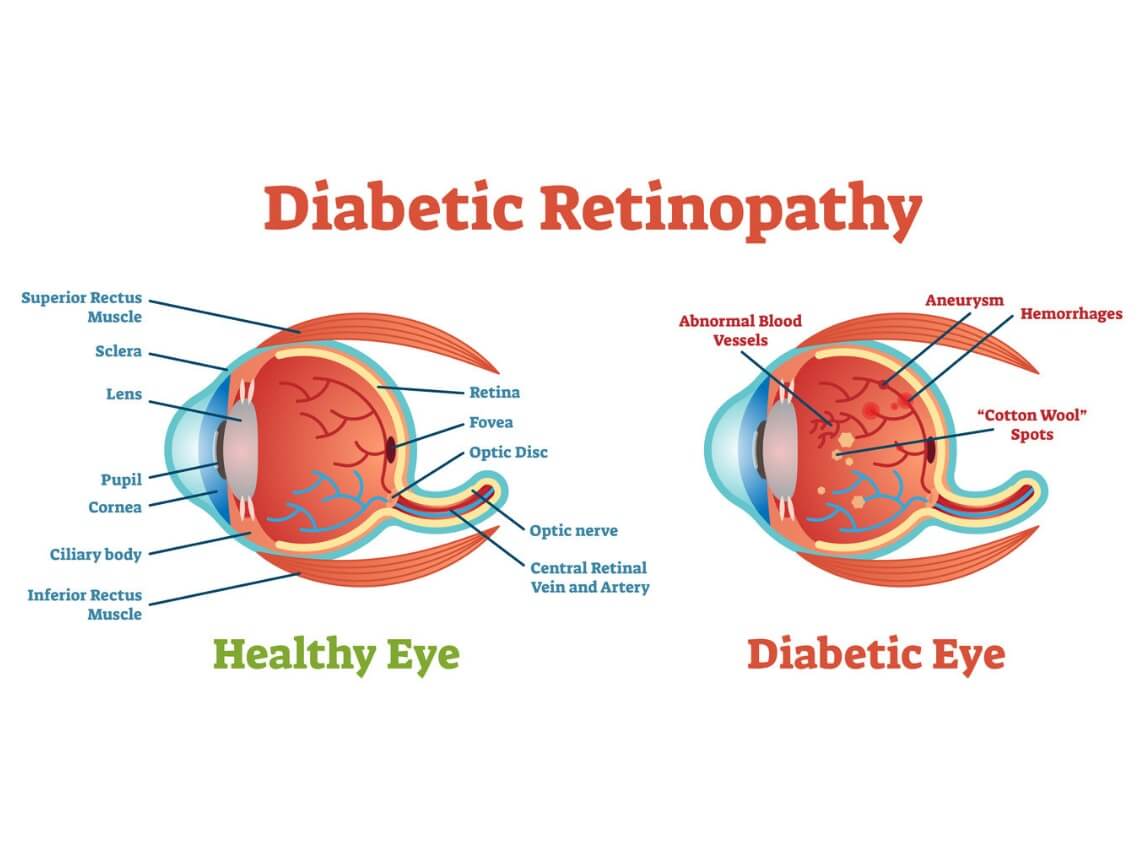
Diabetic eye disease is a group of eye problems that can affect people with diabetes. These conditions include diabetic retinopathy, diabetic macular edema, cataracts, and glaucoma.
Over time, diabetes can cause damage to your eyes that can lead to poor vision or even blindness.
Dr Eleanor Siri, Therapeutic Optometrist joined us on Women Fitness to answers FAQ’s on diabetic eye disease. Read on,
Q1. When does a diabetic patient begin to show effect on the eyes? What Sugar level is critical that can lead to damaging effects on the eye?
There are a couple of factors that contribute to increased risk of developing diabetic eye disease;about:blank
Type of diabetes: Type 1 diabetics are more likely to develop eye disease in subsequent years than type 2 diabetics.
Number of years since diagnosis: The longer you are diabetic, the higher the prevalence of developing diabetic eye disease:
Type 1 diabetes: risk increases approximately 5 years after a diagnosis. Then after 15 years of having diabetes, 98% will have some degree of retinal damage.
Type 2 diabetes: retinopathy may already be present at time of diagnoses. Then after 15 years of having diabetes, 78% will have some degree of retinal damage.
Gestational diabetes: higher risk for developing retinopathy.
Blood sugar levels & A1C
Q2. Early Signs of developing Diabetic retinopathy?
In the early stages of the disease, patients are usually asymptomatic even though eye doctors may start to see blood hemorrhages in the back of the eye during an eye examination.
Q3. List Other Eye Problems Related to Diabetes, name & short brief?
Cataracts: Diabetics are 2 to 5 times more likely to develop cataracts at a younger age than others without diabetes.
Open angle glaucoma: Diabetes nearly doubles your risk of developing open angle glaucoma.
Neovascular Glaucoma: If an uncontrolled diabetic develops neovascular disease, they can develop neovascular glaucoma which is extremely sight threatening.
Q4. Diet & exercise tips to prevent diabetic eye disease.
When it comes to weight loss & maintenance, one size doesn’t fit all. about:blank
Nonetheless, I can promise diabetic patients (especially type 2) that diet control is life changing in terms of progression of disease and comorbidities.
Eating less carbs and more vegetables and proteins
Eat small portions
Snack on vegetables and proteins
Exercising should be a lifestyle not a chore.
Take baby steps.
Overall, join a weight loss/ maintenance program and stay the course.
Q5. Can further deterioration be delayed, how please share proven ways?
Yes.
By lowering your blood sugar and A1C levels with the help of your physician/endocrinologist.
By getting an annual eye examination yearly or as often as indicated by the eye doctor.
Q6. Can it lead to blindness, if yes in what circumstances?
Yes. When blood sugar and A1C levels are elevated.
Official ADA recommendation for diabetics in order to prevent retinopathy:
1. Fasting Blood sugar should be 80–130 mg/dl (4.4–7.2 mmol/L)
2. A1C should be <7.0%
The Evidence-Based AOA Clinical Guidelines for the Management of Diabetes cites a study indicating that if the HbA1c is reduced from an average of 9 to 7 over a 10-year time period, the amount of retinopathy is reduced by > 50 percent in most patients and as much as 76 percent in some patients”
*All diabetics should get a dilated eye examination by an optometrist or ophthalmologist once a year or as indicated by the doctor.
Q7. Is it possible to suffer eye disease even if sugar levels are controlled?
Yes. Especially in Type 1 diabetes.
Q8. An age when this health problem is majorly observed?
A recent study, conducted by the CDC, the prevalence of diabetic retinopathy was high in;
Almost ⅓ of adults >40 years with diabetes
More than ⅓ of African-Americans and Mexican- Americans.
Q9. When should a diabetic patient get their first eye examination?
According to the American Diabetes Association (ADA), anyone older than 10 years with type 1 diabetes should have their first eye exam within 5 years of being diagnosed with diabetes. Generally, all diabetics should get diabetic eye examinations yearly or as indicated by the eye doctor (optometrist/ ophthalmologist).
*In addition, you DO NOT need vision insurance to get a diabetic eye exam. You can use your medical insurance to get one.
About the Author:Dr. Siri obtained her undergraduate degree from Salisbury University, MD and doctorate from Salus University, PA with extensive training at the VA medical center in Baltimore, MD. Dr. Siri is an ADA member and advocate for diabetic eye examinations.
As thanksgiving approaches and our appetites are satisfied with delicious food and limited gathering in caution of COVID-19 may we remind ourselves and our diabetic patients about eating right. Eating doesn’t have to be boring; it’s about finding the right balance.
After the first wave of the pandemic, many of my patients returned with elevated A1C and blood glucose levels. I also had an increased number of patients with diabetic retinopathy as a result.
When discussing nutrition with our diabetic patients, we need to focus on the “diabetes plate method” as described in ADA’s nutrition page https://diabetes.org/nutrition.
What is the diabetic plate method?
Fill ½ of your plate with Non-starchy vegetables like:
III) School-aged children: at least every 2 years if no vision correction is required.
IV) Children who need eyeglasses or contact lenses should be examined annually or as recommended by your eye doctor. #visioncare #sightloss #eyeexam #strabismus #amblyopia #myopia #lazyeye
There is production of new blood vessels from VEGF (Vascular Endothelial Growth Factor) which aids in new blood vessel production from pre-existing blood vessels.
this is necessary in normal development
Nonetheless, this should not be occurring in fully grown humans.
Therefore, these unwarranted new blood vessels are “weak and start to leak out” blood and protein
These new blood vessels can lead to
All this bleeding and leakages lead to disruption of the retina cells thereby leading to blurry vision.
The vision community members recognizing July 2020 as Dry Eye Awareness Month.
“Dry eyes is either caused by the inability of the eyes to “produce” health tears/ tear film or inability to “maintain” healthy tears/ tear film based on multiple factors” – Dr. Siri
Symptoms;
⁃ Gritty feeling
⁃ Redness
⁃ Tearing
⁃ Burning feeling
⁃ Sore feeling
⁃ Heavy eyes
⁃ Light sensitivity
⁃ Fatigued eyes
⁃ Blurry vision especially at night
⁃ Irritation
⁃ Sharp pain without any other symptoms
Causes;
⁃ Environmental – windy, dry, dusty
⁃ Chemically intoxicated environments
⁃ Digital – long digital device use without blinking exercise
We must all focus in on our #mentalhealth during this pandemic. Personally, I’ve had my share of #panicattacks 😫…
How am I managing my mental space?
Lots of spiritual guidance 🙏🏾 (Bible reading and worship)
Meditation🧘♂️
Did you know that Headspace Inc. is providing free subscription to their amazing 😉 meditation 🧘♂️ program to all #NHS employees and #HCPs during this pandemic till December 31st 2020? All you need is NHS email and your NPI number (https://lnkd.in/eBcBKTF). Thanks Headspace Inc. We truly appreciate you.